AI scribes for clinical notes
Ambient AI scribes promise to give clinicians their attention back. Early studies are encouraging but mixed, and design details decide whether the promise holds.
Anyone who has sat on the patient side of a consultation knows the moment: the clinician turns from you to the screen. It isn’t rudeness. It is the structure of modern clinical work, in which the record has to be written while the care is being given.
The scale of that structure is well documented. In a time-and-motion study of 57 US physicians across four specialties, Sinsky and colleagues found that physicians spent 27% of their office day in direct face time with patients and 49.2% on electronic health record (EHR) and desk work. Those who kept after-hours diaries reported another one to two hours each night, mostly on the EHR. A separate study of 142 family physicians, using EHR event logs checked against direct observation, found close to six hours of EHR work in an 11.4-hour day, with clerical and administrative tasks making up almost half of it.
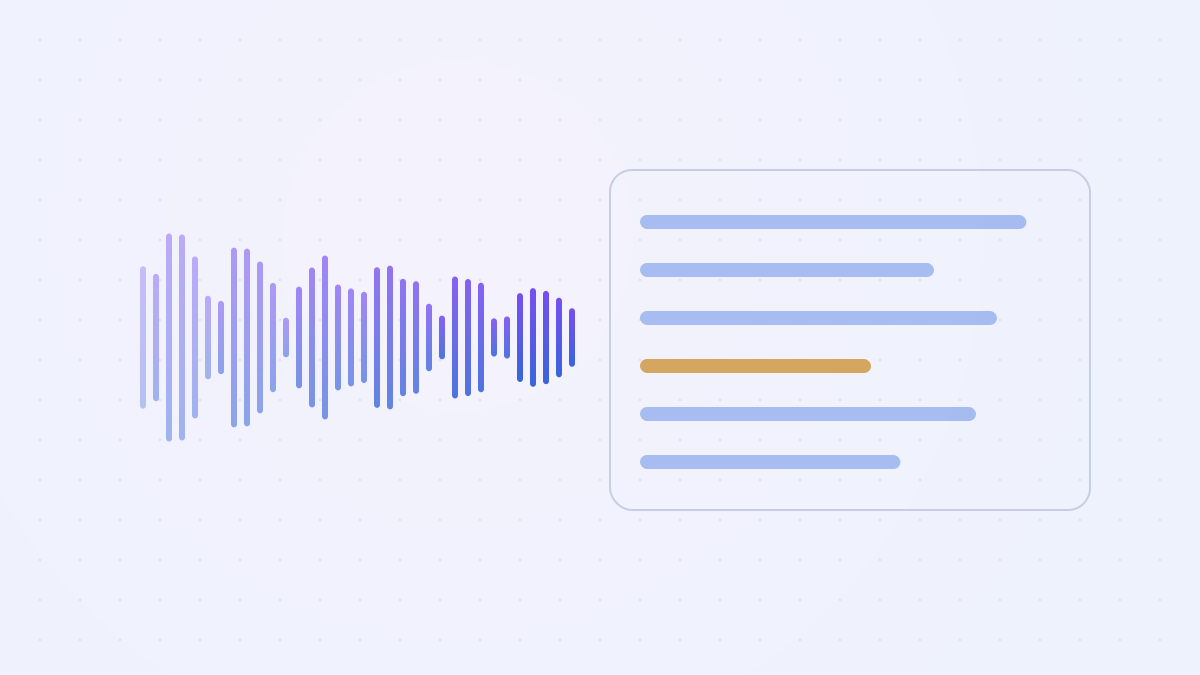
Ambient documentation tools, often called AI scribes, try to change that. They capture the consultation (with consent), transcribe it, and produce a draft note for the clinician to review. The promise is simple: the clinician looks at the patient, and the paperwork gets done anyway.
What the evidence says so far
The early evidence is encouraging, and it is also more varied than the marketing suggests.
A 2025 systematic review of AI scribe implementations found eleven eligible studies, ten of them published in 2024. Nine of the ten studies that measured efficiency reported improvement on at least one metric, and seven reported benefits for clinician wellbeing. The same review found that accuracy varied, drafts often needed manual editing, and errors were an occasional concern.
A prospective pilot at Stanford Health Care with 48 physicians over three months found significant reductions in self-reported task load and burnout, along with better usability scores.
The strongest evidence to date comes from a pragmatic randomised trial published in NEJM AI. It enrolled 238 outpatient physicians across 14 specialties and compared two commercial ambient scribes against usual care. One scribe reduced time-in-note by 9.5% compared with control. The other showed no significant change. Both groups reported improvements in burnout-related measures, which the authors say need confirmation in larger, multicentre trials. Clinicians rated clinically significant inaccuracies as occurring “occasionally” with both tools.
Three lessons follow. First, benefit is real but not automatic: two tools tested under the same conditions gave different results on the primary outcome. Second, how clinicians feel about their work may improve even where minutes saved are modest, and that matters. Third, inaccuracy is not a rare edge case to design around later. It is part of normal operation, so the review experience has to be built for it.
Where design makes the difference
We think four design decisions matter more than the choice of speech model.
Consent that is part of the workflow, not a footnote. Patients should know when a conversation is being captured, why, and what happens to the audio. That means a clear moment at the start of the visit, a simple way to decline, and a record that consent was given. A patient who declines should get exactly the same care.
Drafts that show their sources. A note written from a transcript should let the clinician see where each sentence came from. When a sentence in the “Plan” section links to the moment in the conversation it summarises, checking becomes a matter of seconds. It also makes invented content visible: a sentence with no source is a sentence to question.
Uncertainty highlighted, not smoothed over. Speech recognition struggles with medication names, doses, numbers, and laterality. These are also the details where errors matter most. A good draft marks low-confidence items, such as a dose it could not hear clearly, instead of producing a fluent guess. Fluency that hides uncertainty is the most dangerous property a clinical drafting tool can have.
Nothing files itself. The draft stays a draft until the clinician signs it. That sounds obvious, but it has consequences for interface design: the signing step must be deliberate, and it should be harder to sign with unresolved flags than without them.
What “losing the room” really means
The deeper risk is not a single wrong word. It is a gradual change in who is paying attention to what. If a tool is good enough most of the time, reviewers naturally start skimming. Research on automation bias, the tendency to over-rely on automated advice, suggests this is predictable rather than a failing of individual clinicians. We discuss it in more detail in making clinician review work.
So the aim of an ambient tool is not to remove the clinician from documentation. It is to change their role from typist to editor, and to give them an editing experience that keeps them alert to what matters.
Questions to ask before adopting an ambient tool
- How is patient consent captured, recorded, and honoured when a patient declines?
- Is audio kept? If so, where, for how long, and who can access it?
- Can each drafted sentence be traced to the transcript?
- How are medication names, doses, and numbers flagged?
- What does the tool do with speech it could not recognise?
- How will you measure time-in-note, after-hours work, and note quality before and after rollout?
The last question matters most. The evidence says results vary between tools and settings. The only way to know what a tool does in your clinic is to measure it there. We describe a practical approach in measuring time saved by AI tools.
AId Centric is designing an ambient clinical documentation product (working title) around these principles. This article describes our design approach and the published evidence; it does not report results from our own product.
References
- Sinsky C, Colligan L, Li L, et al. Allocation of Physician Time in Ambulatory Practice: A Time and Motion Study in 4 Specialties. Ann Intern Med. 2016;165(11):753–760. doi.org/10.7326/M16-0961
- Arndt BG, Beasley JW, Watkinson MD, et al. Tethered to the EHR: Primary Care Physician Workload Assessment Using EHR Event Log Data and Time-Motion Observations. Ann Fam Med. 2017;15(5):419–426. doi.org/10.1370/afm.2121
- Lukac PJ, et al. Ambient AI Scribes in Clinical Practice: A Randomized Trial. NEJM AI. 2025;2(12). doi.org/10.1056/aioa2501000
- Shah SJ, et al. Ambient artificial intelligence scribes: physician burnout and perspectives on usability and documentation burden. J Am Med Inform Assoc. 2025;32(2):375–380. doi.org/10.1093/jamia/ocae295
- Hassan H, et al. Clinical Implementation of Artificial Intelligence Scribes in Health Care: A Systematic Review. Appl Clin Inform. 2025;16(4):1121–1135. doi.org/10.1055/a-2597-2017